A Sleep Disorder that can Cause Blindness?
September 24, 2013
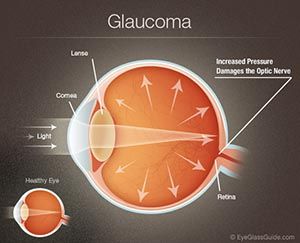
A diagram of a healthy eye and a glaucoma eye

A relatively common sleep condition appears to be linked to the world’s second-leading cause of blindness, according to a recent study published in the August 2013 issue of the journal Ophthalmology .

People with sleep apnea, a disorder that causes disrupted breathing during sleep, were found to be almost twice as likely to develop glaucoma versus those without the condition.  The study was conducted between 2001 and 2004 on 1,000 patients with sleep apnea.

Glaucoma is a condition affecting the optic nerve of the eye.  It gradually affects peripheral vision and can lead to blindness if untreated.  It must be diagnosed early, since it usually causes no pain and most people are unable to detect the peripheral vision loss until the later stages of the disease.

Risk factors for sleep apnea include being overweight, male, over 50 years of age, having high blood pressure, and fatigue during the daytime.  Family members or bed partners often pick up on the signs of sleep apnea first by reporting snoring or episodes of gasping for breath while their partner is asleep.

We routinely test for glaucoma during all eye exams at Mountain View Optometry.  If you (or a family member) have sleep apnea please arrange an appointment to see us, and please tell us if you have the condition so we can ensure all your tests are up to date.

–        Dr. Wilk


Source:  Ophthalmology , news release, Aug. 7, 2013
Close-up of a blue-green human eye with long eyelashes and a brown iris ring
By Tom Wilk • November 24, 2026
Learn how high blood pressure can affect your eyes, the warning signs to watch for, and how regular eye exams can help protect your vision.
Person in a knit hat and sunglasses looking over a snowy mountain landscape.
By Rosendo C • November 24, 2026
Snow glare can increase UV exposure and eye discomfort. Learn how winter eyewear helps protect your eyes during Calgary’s bright, snowy months.
Hand holding black aviator sunglasses in front of a blurred indoor background
By Rosendo C • November 24, 2026
Discover how ZEISS AdaptiveSun prescription sunglasses adjust to changing sunlight for clearer, more comfortable outdoor vision.
Moscot logo with eyeglasses and text “Optical Expertise by Moscot since 1915” on tan background
By Rosendo C • November 4, 2026
Discover the MOSCOT Fall 2026 Collection, featuring six new eyewear styles that blend timeless New York design, expert craftsmanship, and everyday comfort.
Person in a glossy blue coat and pink hat, wearing red glasses against a vibrant pink background
By Rosendo C • October 28, 2026
Discover Etnia Barcelona Fall/Winter 2026 Collection. Explore bold frames, vibrant colours, and unique designs that express your style.
Woman with white hair and blue glasses reaching toward the camera, wearing a blue patterned jacket outdoors.
By Rosendo C • October 21, 2026
Explore the Bevel Eyewear Fall-Winter 2026 collection. Discover stylish, modern eyeglass frames with unique designs that bring personality to your look.
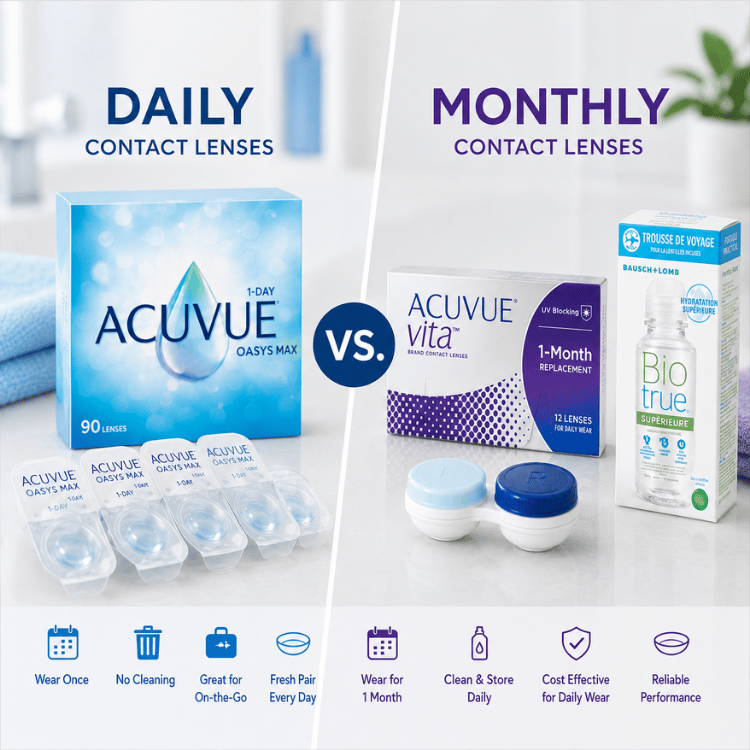
Daily Acuvue Oasys vs monthly Acuvue Vita contact lens comparison on a blue-and-purple split layout
By Tom Wilk • October 14, 2026
Compare daily and monthly contact lenses for comfort, convenience, cost, and lifestyle to find the option that works best for your eyes.
Two people talk in an office, seated across from each other with a computer and desk between them.
By Tom Wilk • October 14, 2026
Learn why regular diabetic eye exams are essential for protecting your vision, detecting early signs of eye disease, and preventing vision loss.
Blurry living room with kitchen, sofa, coffee table, and two hands visible in the foreground.
By Tom Wilk • October 13, 2026
Blurry vision, headaches, or light sensitivity after a concussion? Learn which symptoms may signal the need for an eye exam.
Woman holding a pink fan and pressing her temple in a bright room, looking uncomfortable
By Tom Wilk • September 23, 2026
Learn how hormonal changes during menopause can worsen dry eyes, affect tear quality, and make contact lenses less comfortable.
Show More